
House Clearance Catford Health & Safety Policy
Purpose: This policy sets out the health and safety principles and operational controls used by our house clearance and rubbish removal teams operating in and around Catford. It explains how we manage risks involved in property clearances, waste collection, and removal work to protect staff, clients, contractors and the public while supporting environmental responsibility.Scope: The policy applies to every aspect of house clearance Catford projects including domestic clear-outs, estate clearance, and rubbish collection services. It covers site assessment, handling bulky waste, dealing with potentially hazardous items, vehicle loading, and safe disposal or recycling of materials. The approach is flexible to suit small single-room clearances through to larger full-property removals.
 Principles: Our core principles are to prevent incidents through planning and training, to reduce harm from manual handling and hazardous materials, and to minimise environmental impact from waste work. The policy emphasises teamwork, clear communication on site, and the consistent use of appropriate personal protective equipment during every clear-out task.
Risk Assessment and Site Management
Every clearance begins with a risk assessment completed before work starts. Risk controls include identifying trip and fall hazards, checking for sharps or contaminated waste, assessing vehicle access and segregation of recyclable items. Where asbestos or other suspected hazardous materials are encountered, work stops and professional advice is sought. All team members receive briefings on identified risks before entry.Training, Competence and Supervision
Staff undertaking Catford house clearance duties receive induction training that covers safe lifting techniques, PPE use, infection control, and correct handling of electrical items and white goods. Supervision by experienced crew leaders ensures safe working methods and adherence to this policy. A programme of refresher training and toolbox talks supports ongoing competence.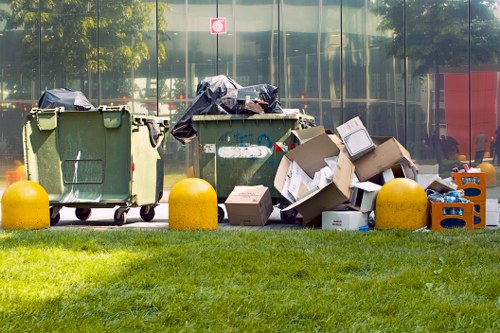 Personal Protective Equipment (PPE): PPE is mandatory for all clearance tasks. This includes steel-toe boots, gloves suitable for hand protection against cuts and biological hazards, high-visibility clothing, and eye protection where required. Respiratory protection is supplied where dust, mould or broken glass present a risk and is used in accordance with the risk assessment.
Manual handling is a key risk in rubbish removal Catford operations. Crews use correct lifting methods, team lifts for heavy items, and mechanical aids (trolleys and straps) whenever practical. Clear access routes and temporary ramps are planned to reduce manual handling demands. Any item assessed as too heavy or awkward is handled using specialist equipment or referred to a contractor experienced in heavy removals.
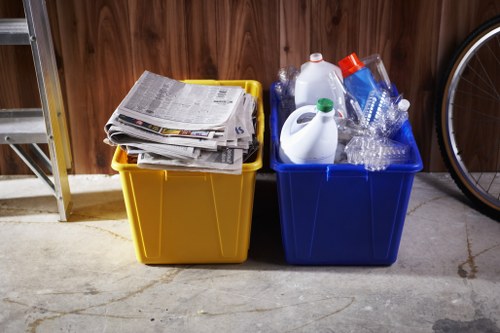
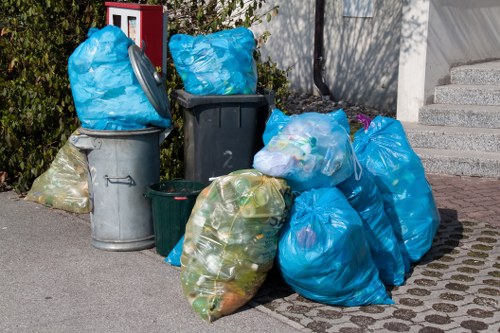
Waste segregation and recycling form part of safe site practice: wood, metal, glass, paper and suitable textiles are separated on-site where possible to reduce landfill and control spill risks. Hazardous household waste (batteries, solvents, aerosols, paint) is isolated and transported for proper disposal following accepted waste transfer and disposal procedures, without attempting unlicensed treatment on site.
Vehicle safety and loading rules ensure safe transit between properties and disposal sites. Drivers check load stability and secure materials to prevent shifting. Vehicle maintenance, daily pre-use checks and clear load documentation are part of the operational routine to protect both crew and road users during rubbish removal runs.
 Incident Reporting and Emergency Response: All incidents, near misses and injuries are reported and investigated to identify corrective actions. First aid provision is available on-site and crews are trained in emergency procedures including fire response and dealing with accidental exposure to hazardous substances. A culture of reporting and learning underpins continual safety improvement.
Communications and client safety responsibilities are emphasised: clients are asked to disclose known hazards (for example, sharps, chemicals, or structural damage) before work commences. Crews maintain professional boundaries and ensure that properties left after clearance are safe and free from obvious hazards to the public.
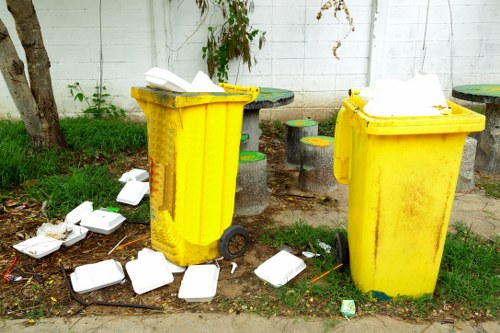 Monitoring, Review and Environmental Commitment: The policy is monitored through site inspections, health and safety audits and regular reviews of operational procedures. Performance indicators include incident rates, near-miss reports and compliance with waste transfer and recycling targets. We are committed to reducing landfill by maximising reuse and recycling, and this environmental aim is integral to safe clearing practice.
Responsibilities: Management is responsible for ensuring resources, training and competent supervision are in place. Crew members must follow safe systems of work and bring unsafe conditions to attention. Contractors engaged for specialist tasks must demonstrate competence and conform to this policy while on site.
Key Controls Summary:
- Pre-work risk assessment and site briefing
- Mandatory PPE and manual handling controls
- Segregation of recyclable materials and safe disposal of hazardous items
- Vehicle safety checks and secure load practices
- Incident reporting, first aid and emergency protocols
Continual improvement is central to our approach. Regular policy reviews ensure the house clearance service remains safe, efficient and environmentally responsible across the service area. This document should be read alongside operational procedures and safety briefings provided to all staff prior to clearance assignments.